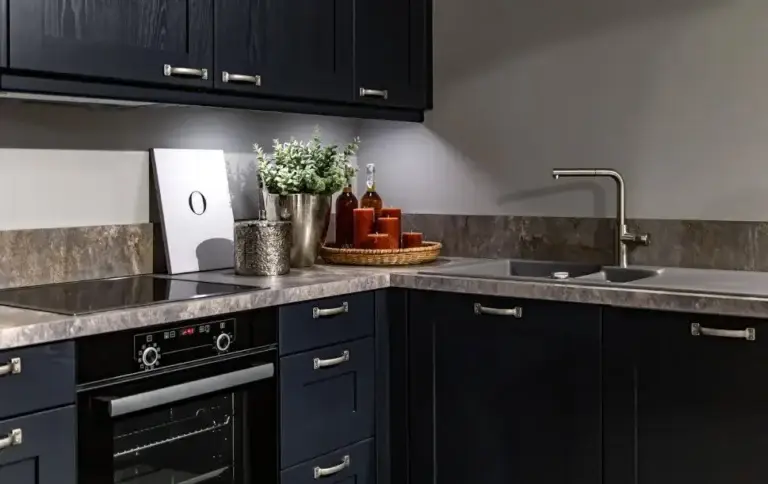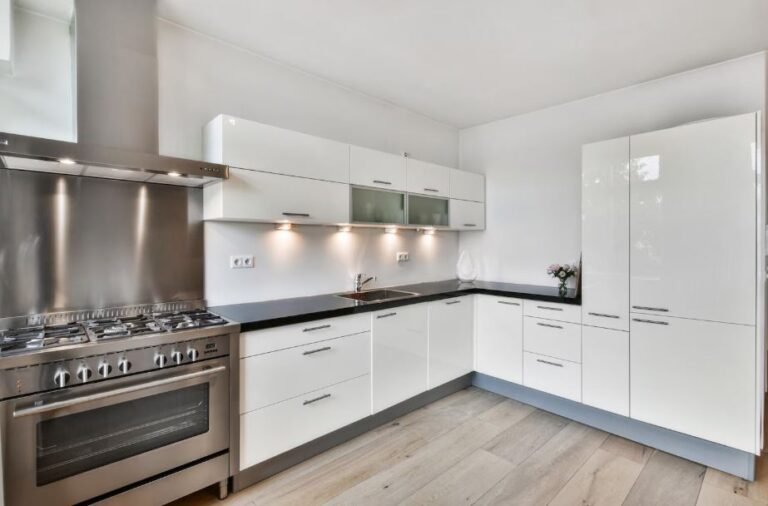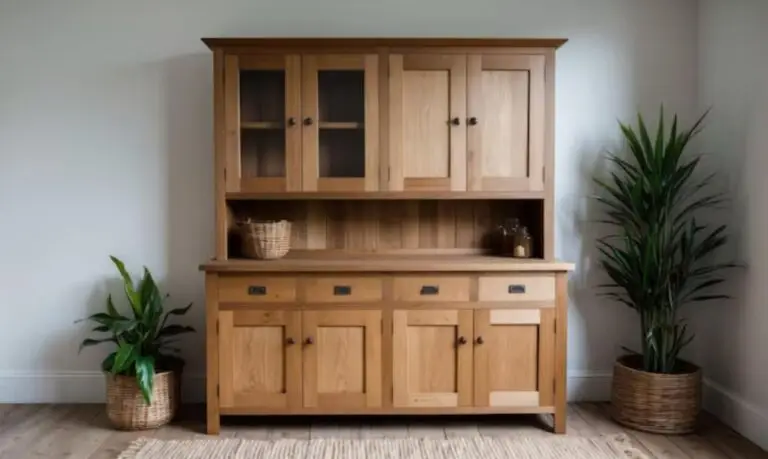
When it comes to cabinets, furniture, and interior surfaces, choosing the right material plays a critical role in determining cost, appearance, and long-term performance. Among the most commonly compared options, thermofoil vs laminate remains a key decision point for homeowners, designers, and project buyers alike.
However, many people still find it difficult to clearly understand the differences:
- Which material is more durable?
- Which one offers better value for money?
- Which option is best suited for a specific project?
In this guide, we will break down thermofoil vs laminate from multiple practical perspectives, including structure, performance, cost, and applications, to help you make a more informed decision.
What Is Thermofoil?
Definition and Structure
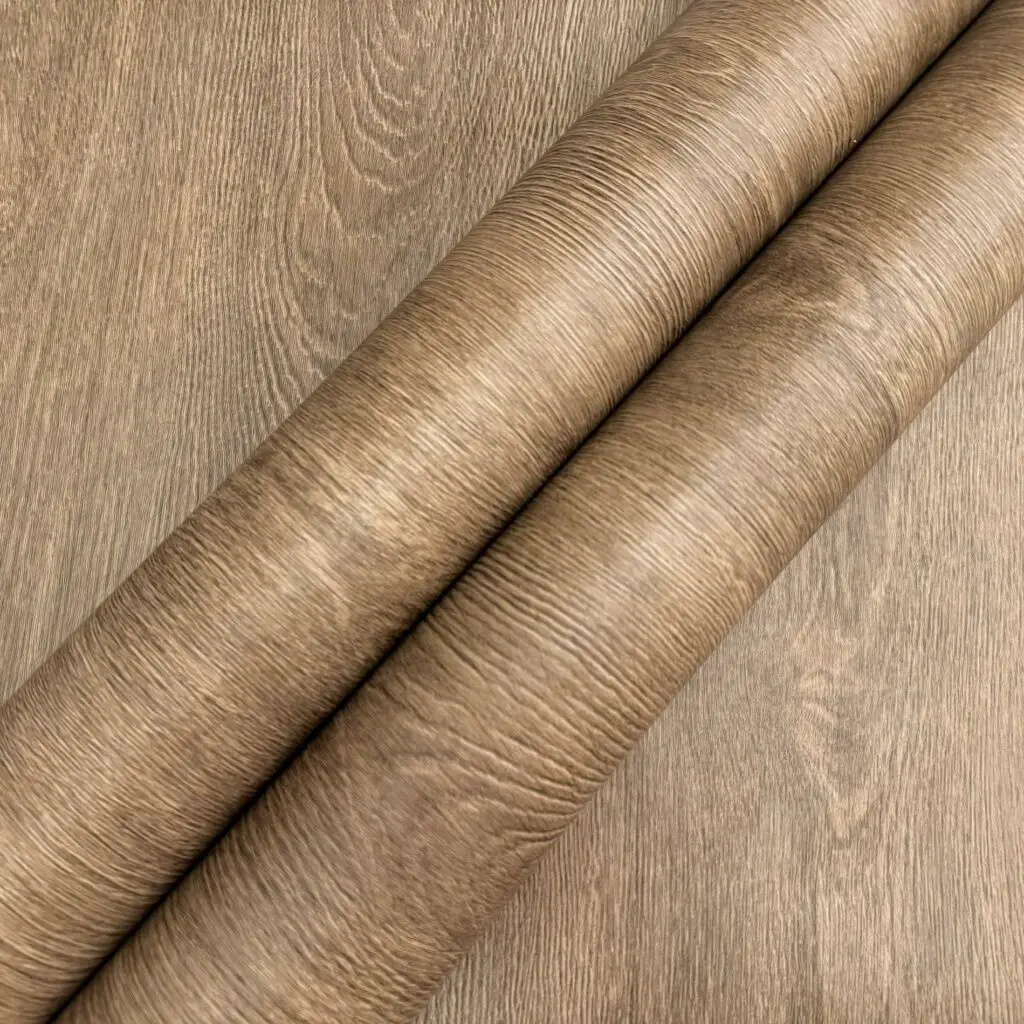
Thermofoil is a surface material created by applying a PVC film onto an MDF (medium-density fiberboard) substrate using heat and vacuum pressure. This process allows the film to tightly wrap around the surface, creating a seamless finish, even on curved or detailed designs.
Key Features
- Smooth, seamless surface appearance
- Suitable for curved and complex shapes
- Good moisture resistance
- Widely used for cabinet doors and furniture surfaces
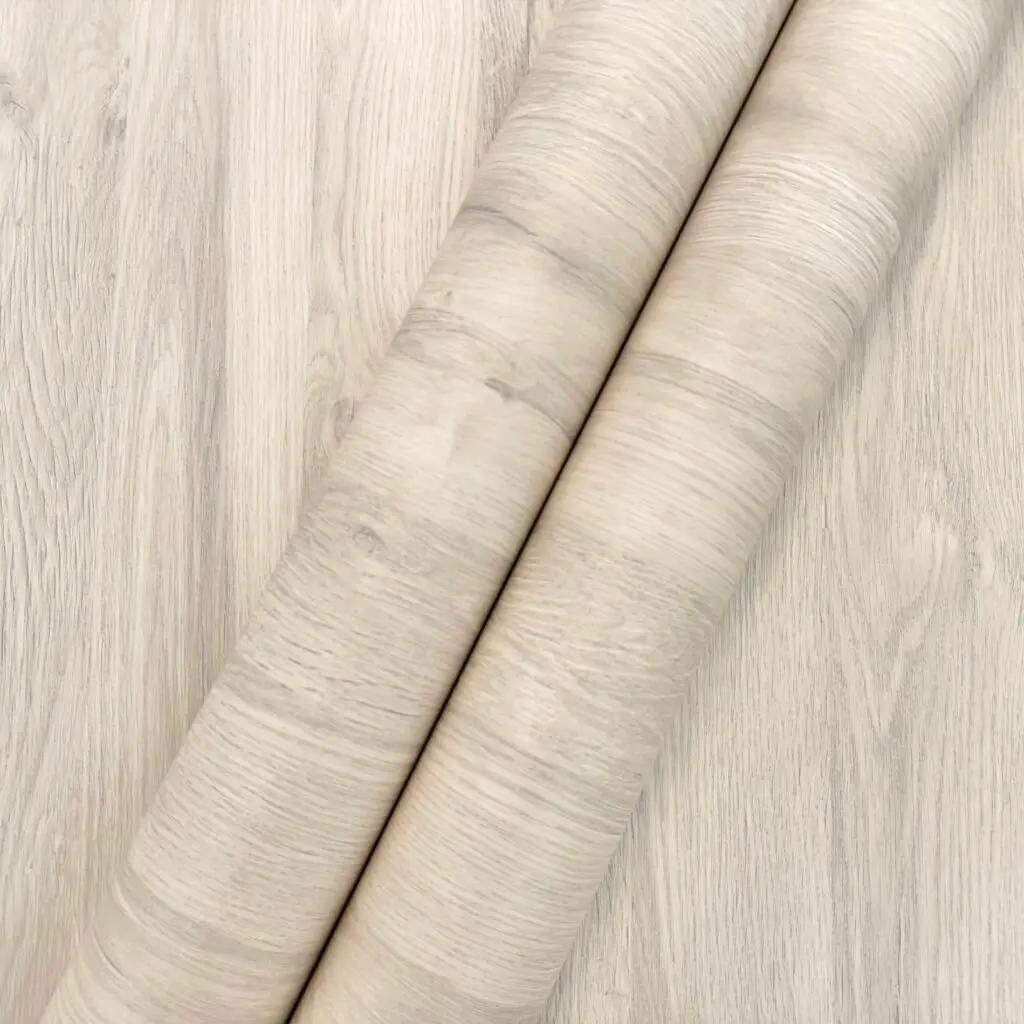
High-quality PVC decorative films, such as those supplied by Lonmay Film, play a crucial role in ensuring the consistency and performance of thermofoil applications.
What Is Laminate?
Definition and Composition
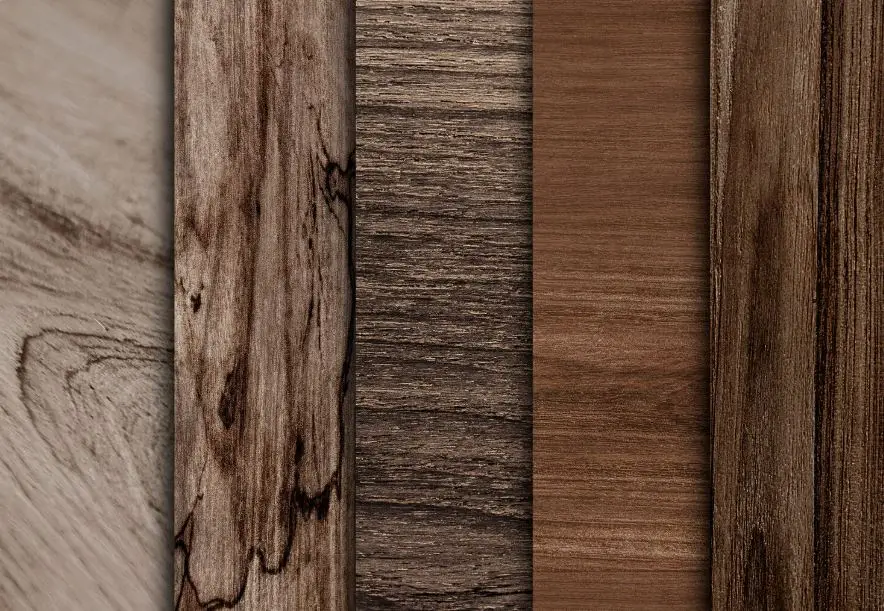
Laminate is a composite material made by pressing multiple layers of paper and resin under high pressure. It is typically bonded to substrates such as MDF or particle board to create a durable surface layer.
Key Features
- High surface hardness and scratch resistance
- Wide range of textures and finishes
- Best suited for flat surfaces
- Requires edge banding for finishing
Thermofoil vs Laminate: Key Differences
To better understand thermofoil vs laminate, the following table highlights their main differences:
| Feature | Thermofoil | Laminate |
|---|---|---|
| Manufacturing Process | Vacuum-formed PVC film | High-pressure layered sheets |
| Surface Finish | Seamless and smooth | Textured with visible edges |
| Design Flexibility | Suitable for curved surfaces | Best for flat panels |
| Scratch Resistance | Moderate | High |
| Heat Resistance | Lower | Higher |
| Moisture Resistance | Good | Good |
| Cost | Lower | Medium |
| Applications | Cabinet doors, decorative surfaces | Countertops, cabinets, furniture |
Thermofoil vs Laminate for Cabinets
Thermofoil Cabinets
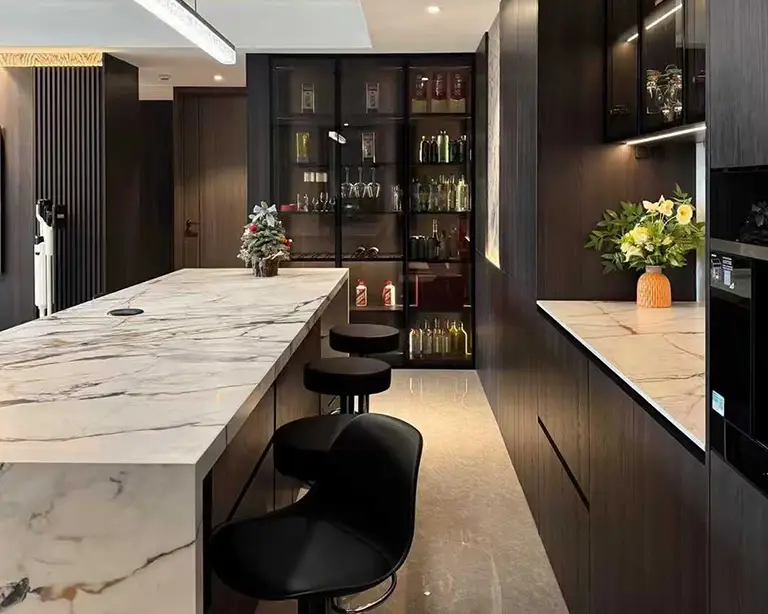
Thermofoil cabinets are known for their clean, seamless appearance and modern aesthetic. They are typically more affordable and ideal for projects with controlled budgets.
They work best in environments with moderate use and minimal exposure to high heat.
Laminate Cabinets
Laminate cabinets offer better scratch resistance and are more suitable for high-traffic kitchens or heavy-use environments. However, visible edge banding may affect the overall visual continuity.
In the thermofoil vs laminate comparison, the right choice often depends on usage intensity and design preference.
Thermofoil vs Laminate Durability
Wear Resistance
Laminate surfaces are generally more resistant to scratches and wear due to their harder outer layer. Thermofoil, while durable, has a slightly softer surface.
Heat and Moisture Performance
Thermofoil can be sensitive to high heat, especially near ovens or stovetops. Laminate performs better in high-temperature environments. Both materials offer good moisture resistance when properly installed.
Long-Term Maintenance
Both materials are easy to clean and maintain. However, laminate tends to have a longer lifespan in high-use applications.
Cost Comparison: Thermofoil vs Laminate
Initial Cost
Thermofoil is typically more budget-friendly, making it a popular choice for cost-sensitive projects.
Installation Cost
Thermofoil can be applied seamlessly in one process, especially for complex shapes. Laminate requires additional edge banding, which may increase labor costs.
Long-Term Value
- Thermofoil offers better value for low to moderate use environments
- Laminate is more cost-effective in high-wear scenarios due to its durability
Which Is Better for Your Project?
Choose Thermofoil If:
- You need curved or detailed surface designs
- You prefer a seamless, modern appearance
- You are working within a limited budget
Choose Laminate If:
- You need higher durability and scratch resistance
- The surface will be exposed to heavy use
- Your design mainly involves flat panels
Alternative Surface Solutions to Consider
With the advancement of material technology, modern decorative films are emerging as a more versatile solution. These materials combine:
- The flexibility and seamless finish of thermofoil
- Improved surface durability comparable to laminate
For large-scale projects such as hospitality, commercial spaces, and mass furniture production, advanced PVC decorative films offer:
- Consistent quality and performance
- A wide range of textures and finishes
- High customization flexibility
- Scalable supply for global markets
Suppliers like Lonmay Film provide reliable solutions that meet these evolving industry demands.
Common Mistakes to Avoid
When choosing between thermofoil vs laminate, avoid the following:
- Making decisions based solely on price
- Ignoring environmental factors such as heat and humidity
- Overlooking installation complexity and maintenance needs
- Overdesigning beyond actual project requirements
Conclusion
In the comparison of thermofoil vs laminate, there is no single “best” material. The right choice depends on your specific project requirements.
- Thermofoil is ideal for cost-effective, visually seamless applications
- Laminate is better suited for high-durability environments
For projects that require both flexibility and performance, modern decorative film solutions are becoming an increasingly popular alternative. Working with a professional supplier such as Lonmay Film can help you achieve a better balance between cost, design, and long-term performance. Contact Lonmay at esther@lonmay.com.cn.