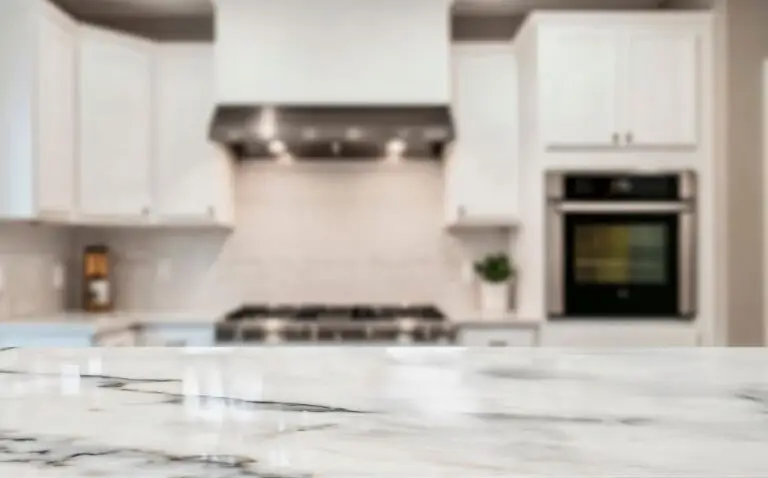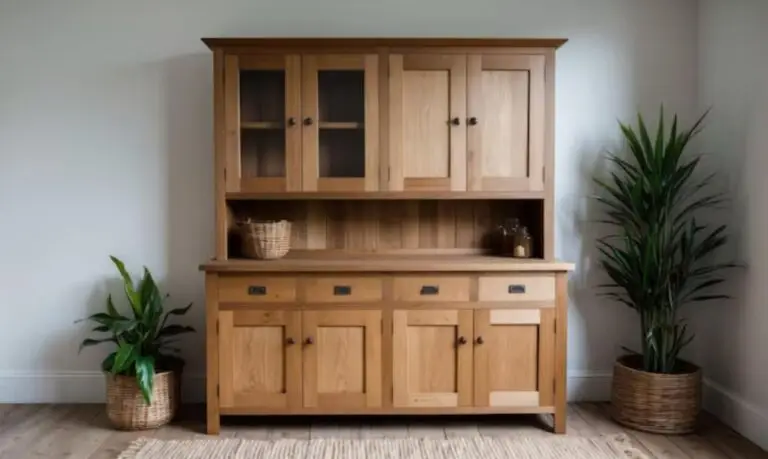
As the furniture manufacturing and interior decoration industries continue to evolve, the demand for high-performance surface finishing materials is increasing. Today’s materials are expected to deliver not only strong visual appeal, but also cost efficiency, processing flexibility, and consistent quality.
Traditional options such as solid wood veneer, paint, or laminate can offer certain advantages, but they often come with limitations, including higher costs, complex processing, or longer production cycles.
In this context, PVC foil has become a widely adopted solution across furniture manufacturing, interior decoration, and commercial applications. Its strengths in design versatility, processing adaptability, and scalability make it a preferred choice for modern production and renovation needs.
What Is PVC Foil?
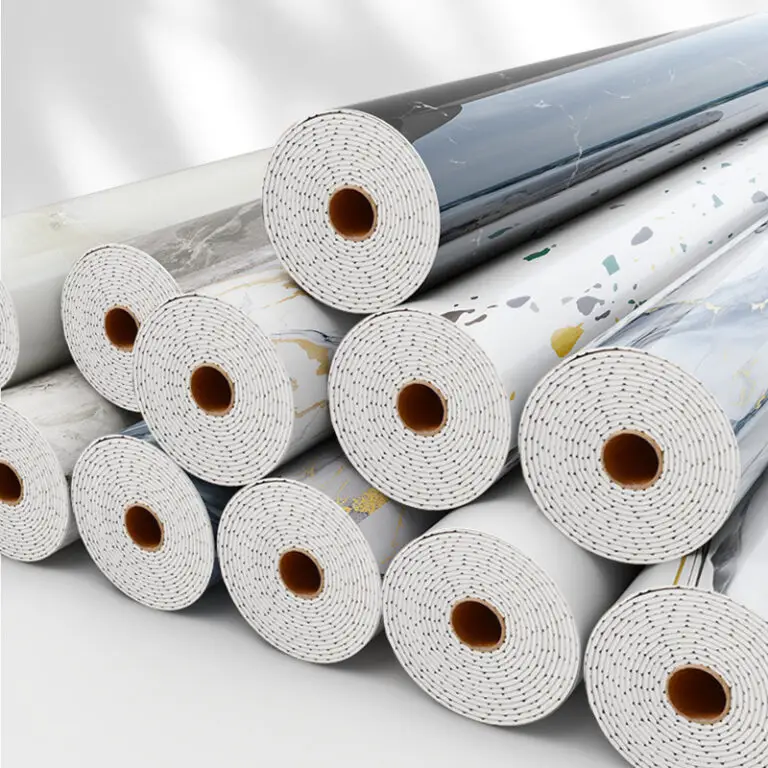
PVC foil is a decorative film made primarily from polyvinyl chloride (PVC), designed for surface covering and finishing applications.
In practice, PVC foil is commonly applied to substrates such as:
- MDF (medium-density fiberboard)
- Wood
- Plastic surfaces
- Metal panels
Its primary function is to enhance both the appearance and performance of surfaces by:
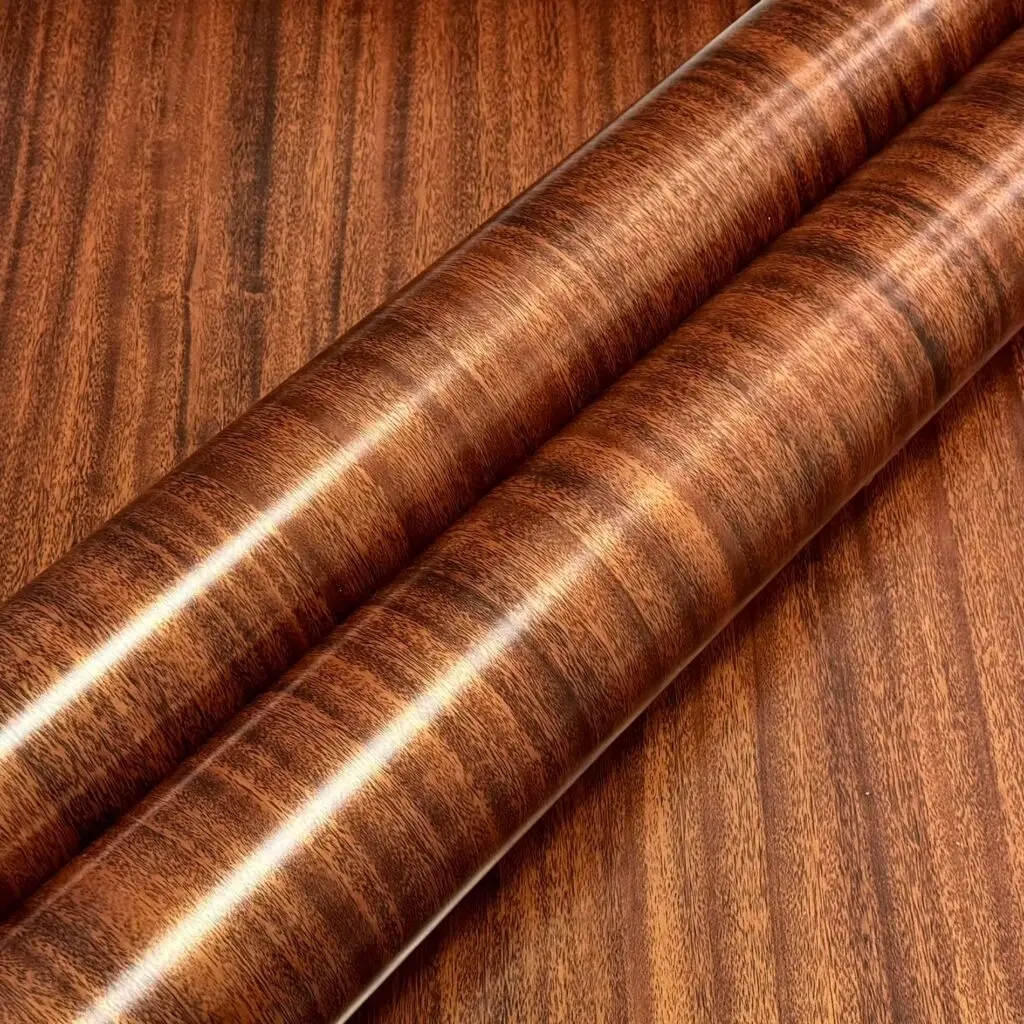
- Replicating natural or modern finishes (such as wood grain or stone effects)
- Improving wear resistance
- Adding protection against moisture and stains
Essentially, PVC foil serves as a surface finishing solution widely used in industrial and commercial applications.
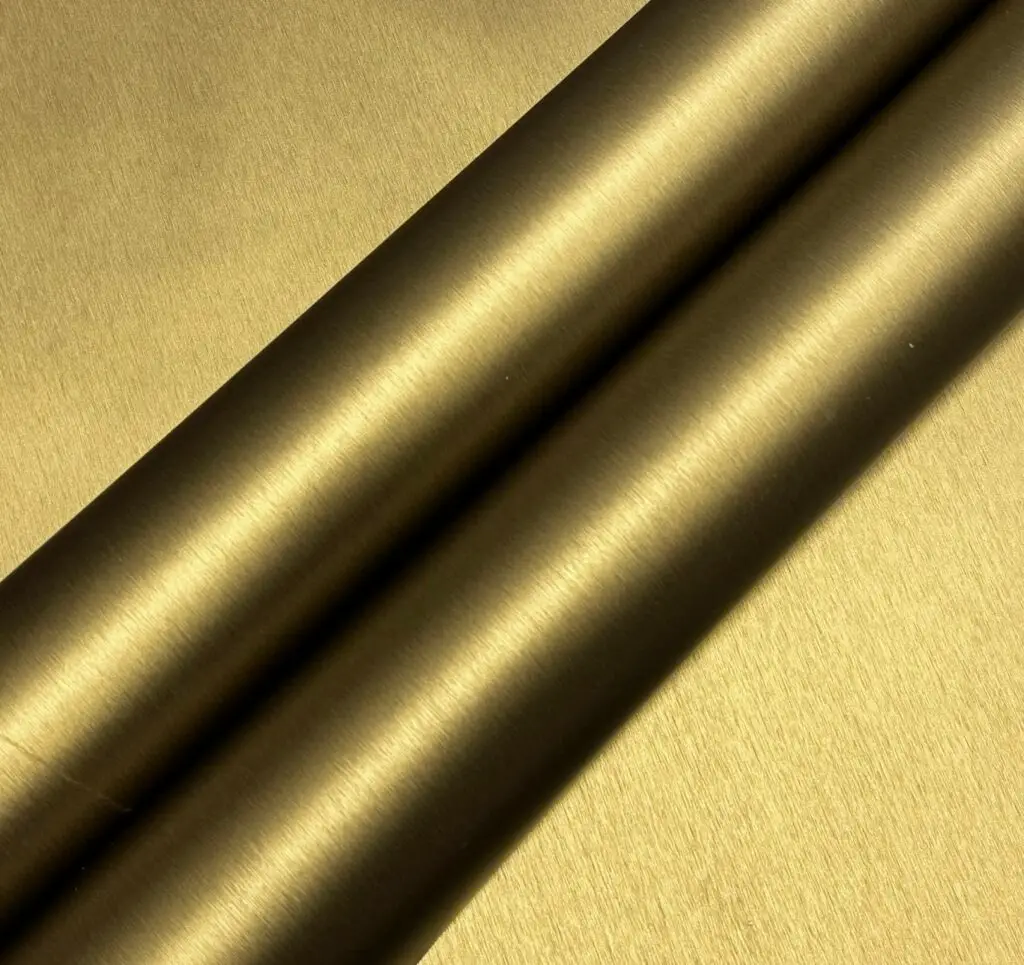
In many modern architectural applications, PVC foil is also categorized as part of the broader interior film industry used for decorative surface finishing.
PVC foil can also be laminated onto decorative wallpaper substrates to create moisture-resistant and easy-to-clean wallcovering surfaces commonly used in residential and commercial interiors.
What Is PVC Foil Made Of?
The performance of PVC foil comes from its material composition and layered structure.
Main raw materials:
- PVC resin
- Plasticizers, which improve flexibility
- Stabilizers, which enhance heat and aging resistance
- Pigments or printing inks, which create the visual design
Typical structure:
| Layer | Function |
|---|---|
| Protective top layer | Provides scratch, wear, and stain resistance |
| Decorative layer | Creates visual effects such as wood, stone, or other finishes |
| Base layer (PVC) | Ensures flexibility and structural stability |
Material characteristics:
- High flexibility, suitable for flat and curved surfaces
- Stable physical properties for consistent production
- Good resistance to moisture and contamination
These characteristics make PVC foil a core material in furniture and interior finishing industries.
Types of PVC Foil
Depending on application requirements, PVC foil can be categorized in several ways:
By Surface Finish
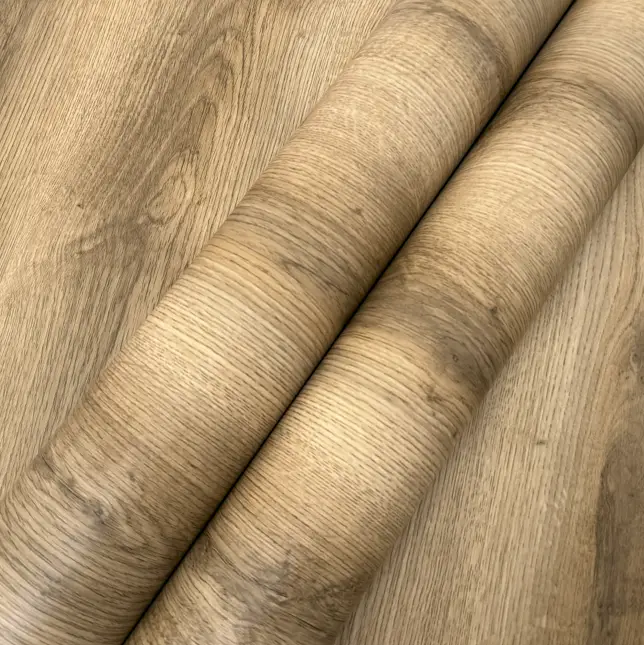
- Wood grain PVC foil
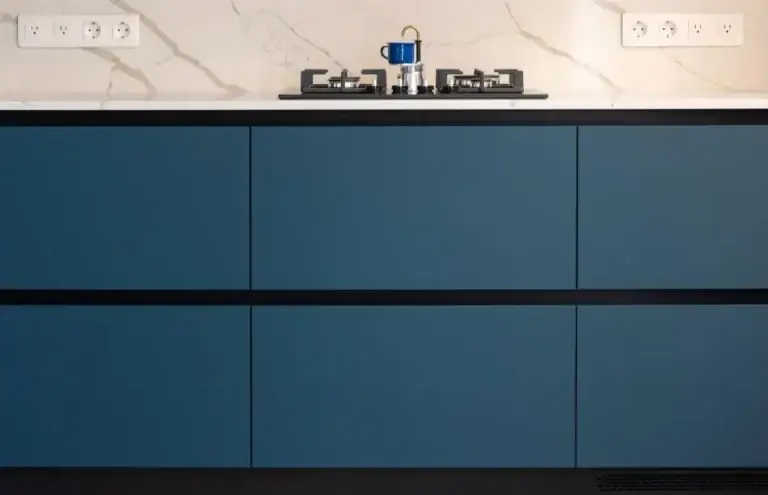
- Marble or stone effect PVC foil
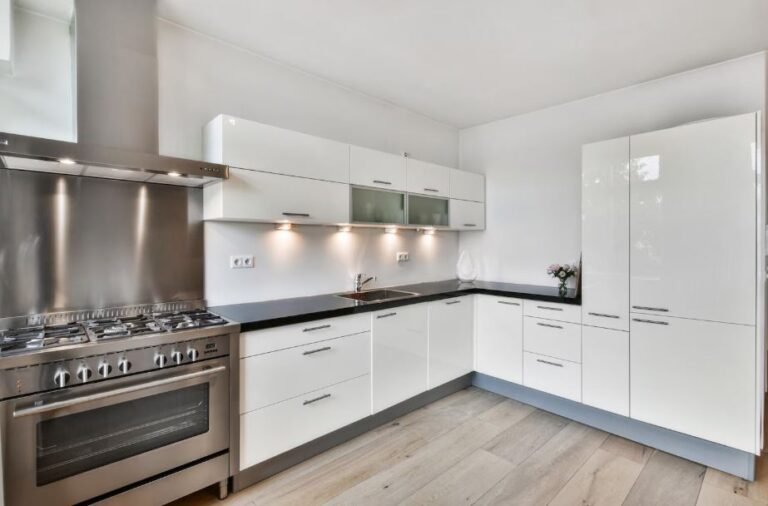
- High gloss PVC foil
- Matte PVC foil
These options allow designers and manufacturers to achieve a wide range of interior styles.
By Application Method
- Self-adhesive PVC foil
- Vacuum press PVC foil
- Membrane press foil
Different processing methods are suited to different production environments, from manual installation to industrial manufacturing.
By Thickness
- Thin decorative foil
- Thick functional foil
Thickness plays an important role in durability and application performance.
Key Features and Benefits of PVC Foil
Compared to traditional surface materials, PVC foil offers several advantages:
Cost-effective
More affordable than solid materials or high-pressure laminates, making it ideal for large-scale use
Flexible and easy to process
Suitable for both flat surfaces and complex shapes
Wide design variety
Available in a broad range of colors, textures, and finishes
Moisture and stain resistance
Performs well in environments such as kitchens and bathrooms
Lightweight
Adds minimal weight to the final product
Suitable for mass production
Highly compatible with industrial manufacturing processes
Common Uses of PVC Foil
PVC foil is widely used in furniture and interior applications:
PVC Foil for Furniture
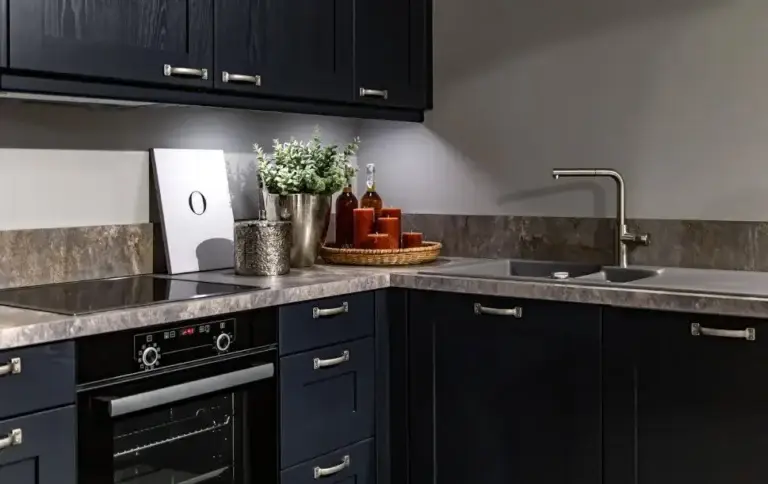
- Cabinets, wardrobes, and office furniture
- Provides both decorative and protective functions
PVC Foil for Interior Walls
- Wall decoration and refurbishment
- An alternative to certain paint or wallpaper solutions
PVC Foil for Doors and Cabinets
- Surface finishing for doors and cabinet panels
- Ensures consistent appearance and quality
PVC Foil in Commercial Applications
- Hotels, offices, and retail environments
- Focus on durability and installation efficiency
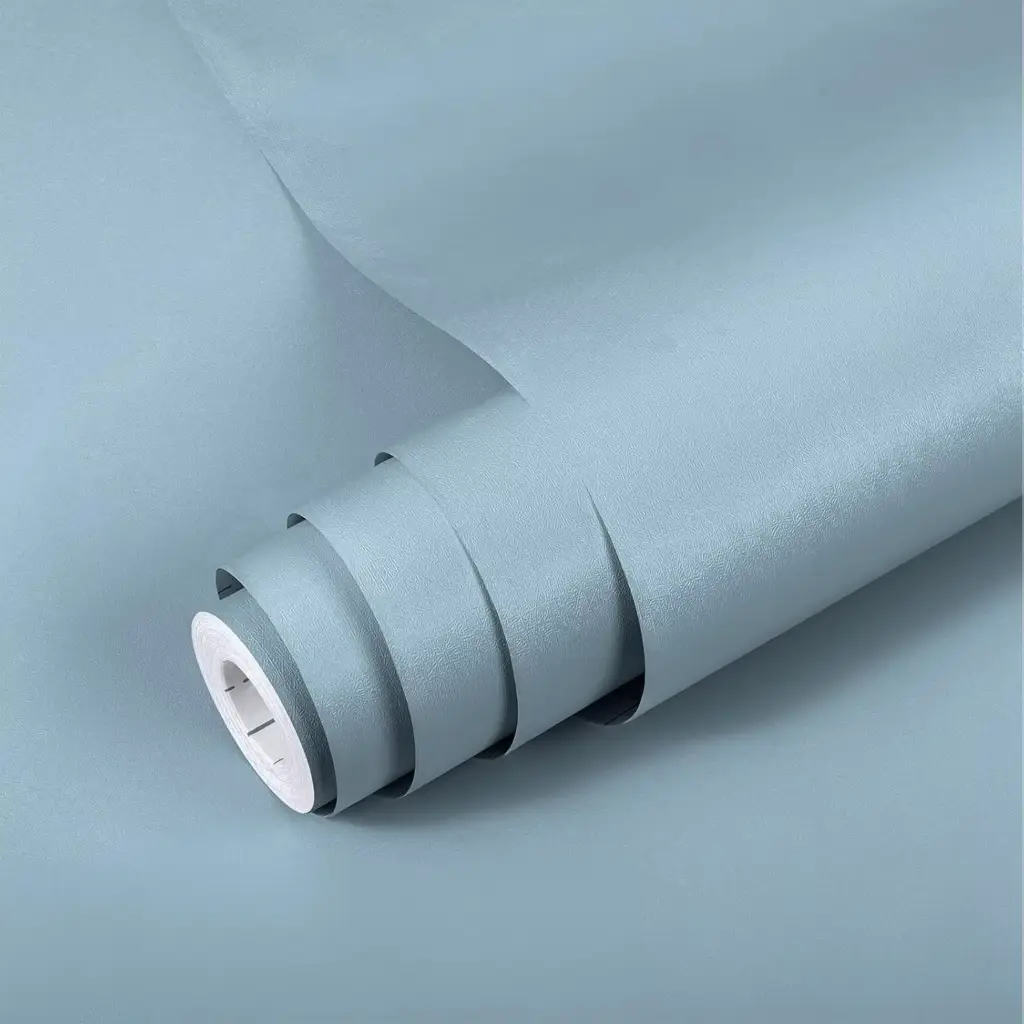
PVC Foil vs Other Surface Materials
To better understand its value, here is a comparison with other common materials:
| Criteria | PVC Foil | Laminate | Paint | Veneer |
|---|---|---|---|---|
| Cost | Lower | Higher | Medium | High |
| Processing | Flexible | More complex | Simple | Complex |
| Durability | Good | Excellent | Moderate | Good |
| Design variety | High | Medium | Medium | Limited |
Overall, PVC foil offers a strong balance between cost efficiency and application flexibility.
Is PVC Foil Durable and Safe?
Durability
Under normal conditions, PVC foil provides reliable performance, including:
- Water resistance
- Stain resistance
- Wear resistance
Its lifespan depends on the application environment and usage intensity.
Safety
- Suitable for indoor applications
- Available in different performance grades depending on requirements
- Manufactured under controlled industrial processes for consistent quality
Always refer to supplier specifications for detailed technical performance.
How to Choose the Right PVC Foil
When selecting the right PVC foil, consider the following factors:
Application
Different uses, such as furniture, walls, or commercial spaces, require different specifications
Thickness and durability
High-traffic areas may require thicker and more durable options
Surface design
Choose finishes that match the overall design concept
Processing method
Ensure compatibility with your production process (press or adhesive application)
Supplier capability
- Range of available designs
- Customization options
- Proven project experience
Conclusion
Overall, PVC foil has become an essential material in modern furniture manufacturing and interior finishing.
It helps to:
- Reduce production and project costs
- Expand design possibilities
- Improve efficiency in manufacturing and installation
At the same time, it meets the performance and aesthetic demands of a wide range of applications.
For projects that require a balance of cost, efficiency, and design flexibility, PVC foil is a practical and reliable surface solution. Contact us at esther@lonmay.com.cn.